
Associate of Science in Radiography
The big picture of a patient’s overall health begins with your first snapshot.
*Wage and job growth based on Statistics from Bureau of Labor Statistics.

About Our ASR Program:
Our Associate of Science in Radiography (ASR) program is one of the oldest and most successful radiography programs in the region. We excel at training medical professionals who are skilled in performing diagnostic x-ray procedures and providing attentive patient care in a variety of situations. Technologists have their pick of workplace settings, including large hospitals, trauma centers, outpatient imaging centers, physician clinics, and even mobile imaging units.
In our ASR program, students will get the best of both worlds: flexibility and hands-on learning! Hybrid courses allow students to get tangible and real-world experience in the classroom and lab, as well as the flexibility of online learning. Our expert faculty utilize technology and advanced educational methods to prepare students for a successful career after they graduate. This innovative approach provides diversified learning opportunities for our students.
To view the most recent JRCERT Award Letter, click here.
Your ASR Experience:
Year One
In your first year, you will concentrate on basic academic courses. Your clinical education will launch with laboratory demonstrations that include practice on phantoms and simulated patients. You will start performing supervised radiologic examinations in the second semester.
Year Two
Your second year will focus on advanced studies with increased responsibility and independence within the clinical setting. Even better, you can rotate through a variety of specialty modalities, including CT, MRI, ultrasound, radiation therapy, nuclear medicine, and cardiovascular interventional technology.
Beyond
Inspired to go further? Second year ASR students can enter the dual degree BSDI track for CT or MRI.

"Since graduating from Cox College I have worked at a number of hospitals and worked with students from different programs. Working with other programs and speaking with their students, I have realized what an advantage I was given by attending Cox. The program's instructors, who are wonderful, care and want to see you succeed. Having leaders and mentors who are very knowledgeable and committed to watching you succeed and come out on top of the field makes a huge difference when you are applying for jobs. I am very proud graduate from one of the best programs for radiology technologists."
Megan Ledbetter '19
“The Cox College Radiography program prepared me for a career and also provided me with all of the tools I would need to succeed.”
Stefanie Sisco '19
“The ASR program at Cox College prepares you very well for the registry. I felt very confident when I took mine. Not only do they prepare you well, the professors of the ASR program are very knowledgeable and understanding. They are some of the best people I met while at Cox College.”
Ashlyn Wisdom '21
NOTE: Cox College has begun the teach-out process for the radiology program in the Academic Year 2024-2025 and concluding in May of 2026. The Cox College program will no longer be admitting students after the fall of 2024. Radiology education moving forward can be found at the other members of the Alliance or in the region.
General program information
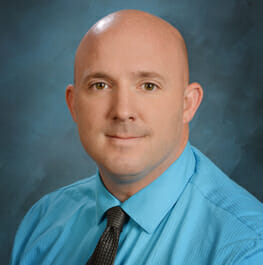
Daniel Edwards, EdD, RT(R)(MR)(ARRT), ATC/L
ASR Program Director
Daniel.Edwards@coxcollege.edu(417) 269-1073
Cox College’s Associate of Science in Radiography (ASR) program prepares students for American Registry for Radiologic Technologists (ARRT) certification exam and registration. ARRT certification is the minimum requirement to practice radiography at most facilities in most states. Some states may have additional licensing requirements, provided here. Licensing requirements vary by state/territory and relocating could impact whether you will meet eligibility requirements for licensure. Employers, state licensing agencies, and federal regulators all consider an ARRT credential to be verification that students met rigorous professional standards. Currently, the state of Missouri does not have additional licensing requirements.
If questions remain after reviewing the information provided, contact your program chair. While Cox College can provide initial guidance, it is ultimately your responsibility to continually check with the state/territory where you intend to seek licensure to confirm all licensing/certification requirements.
Our mission statement, goals, and learning outcomes can be found here.
Cox College has articulation agreements with the following organizations. Those agreements can he found below.
Cox College's academic calendar can be found here.
Cox College's academic catalog can be found here.
The supplemental academic catalog can be found here.
The ASR program's clinical obligations can be found here.
Cox College works with the following health care facilities:
- Bone and Joint Orthopedic Clinic
- Cox North - ER, Outpatient Services, and Inpatient Psychiatric
- Cox South
- Endoscopy
- Fluoroscopy
- ER (Level 1 Trauma Center)
- Main Department - Inpatient and Outpatient Services
- Surgery
- Turner Center 24/7 Urgent Care Plus
- Ferrell Duncan Outpatient Imaging
- Jared Neurological Clinic
- Martin Center Outpatient Imaging Center
- Meyer Orthopedic Rehabilitation Hospital (MORH)
- Superclinics - Urgent Cares
- Nixa
- East Battlefield (Springfield)
- Ozark
- Sunshine and National (Springfield)
- Wheeler Orthopedic Clinic
The purpose of this section is to provide a complete program guideline to the clinical and classroom structure of the ASR Program. The program is based on the premise of providing the best combination of didactic and clinical training for the student. All program effectiveness data can be found on the Cox College website (coxcollege.edu) or at www.jrcert.org, or collected from one of the ASR program faculty members.
The Cox College ASR student will be required to purchase at least two pairs of Cox College issued scrubs for clinical and lab classes. The average cost of the scrubs can range based on style, fabric, embroidery charges, and other items beyond the control of the ASR program, but the student should expect to pay between $60-100 per pair of scrubs ordered. The scrub tops must be embroidered with the Cox College logo. Scrubs ordered through the school may be billed through the student fees.
Through additional student fees, students will purchase (allowing financial aid to cover the costs) a software for clinicals called Trajecsys. This is usually a one-time fee of $150 for the duration of the program. This software is used to keep record of the student’s clock-ins and clock-outs, clinical feedback on their performance, the individual dosimeter reports, and their competencies.
The student will have a fee for MyClinicalExchange which the financial office adds to the student account. The fee is generally $25.00 each semester. This software houses the documentation for clinical access, such as vaccinations, drug test results, etc.
Students will have note packets to purchase each semester for their courses, which are charged as fees to their student account. The note packets range from $5-50 each depending on the number of pages and printed of the required material in the note packets.
Textbooks are kept to a bare minimum to help defray costs to the students. The faculty try to use the same textbook in multiple courses and provide the remaining content in the note packets provided. E-Books are generally okay, but check with the professor before ordering to ensure that is acceptable.
- Some textbooks will require an online companion access, which is non-transferrable when buying used books often.
- We encourage students not to rent textbooks as they will be used multiple times throughout the program.
The Cox College courses are hybrid in nature, with testing and assignments done virtually. This requires the purchase of an additional external webcam to use on remote testing. This allows for full scanning of the student’s testing environment. The webcam built into a laptop will notsuffice for this requirement. There are additional software and hardware requirements for the student to consider when purchasing or using a device. Computer recommendations can be found at this link: https://coxcollege.edu/academics/technology/online-technical-requirements/
The program begins with an introductory session during the cohort’s first semester. This semester includes didactic instruction in the courses of RAD 100, RAD 110, RAD 120, and RAD 141, with additional clinical instruction and simulations for RAD 100, RAD 121, and RAD 141. Classes and labs are held two to three days per week during the first semester for the cohort. Some class days for the cohort may be held virtually.
RAD 101 is an introduction to clinicals, with clinicals typically one to two days a week, with approximately 10 hours per week of clinicals. The student may be required to do up to 10 hours of a clinical rotation in one day in this course. This course is held in the semester before the student begins full clinical rotations. This course is also where students do tours, policy review, orientations, and other preparations for the full clinical experience.
After the RAD 101 course is complete, the student will begin clinical rotations at minimum for two to three days a week for RAD 191 and RAD 192. There is a required minimum number of clinical hours per week to complete and by the end of the semester. The minimum clinical hours per course is based on the number of credit hours for the practicum course.
- The student should expect that they may have class day(s) when not in clinicals. Some class days for the cohort may be held virtually.
- At this point in the program, the student should expect to spend at least thirty hours per week performing clinicals or being in the classroom, excluding time spent studying. This is why it is suggested students try to avoid working more than 20 hours per week if possible.
Clinical shifts are typically scheduled for 7.0 hours per day, but can go up to 10 hours per day, including a meal break. Weekend rotations or individualized schedule plans maybe different than the typical schedule. Per JRCERT accreditation policy, the student may perform up to ten-hour clinical days maximum. The clinical times vary based on the location’s peak volume times and providing the student with the most opportunity for experience.
The day shift can begin as early as 6:30 a.m. or as late as 9:00 a.m. The day shift can end from 1:30 p.m. up to 4:00 p.m. The evening shift begins at the earliest at 2:30 p.m. and the latest at 8:00 p.m. and can end at 9:30 p.m. up to 2:00 a.m. The students are allowed at least a 30-minute lunch break on each shift. The shift times are based on the locations ability to have a Clinical Preceptor scheduled. “Most” clinical rotations start at 7:30 a.m. or 8:00 a.m. for the day shift.
Clinical rotations include CoxHealth and non-CoxHealth facilities. Non-CoxHealth facilities may have different requirements of students.
Students will rotate on a minimum amount of evening and weekend rotationsto gain a full experience of the career field. These rotations are invaluable, and our Clinical Coordinator will work with you on scheduling them for the best time possible for your personal schedule.
There are overnight shifts available to students, when there are clinical preceptors on site. Once again, these cannot be the students’ primary rotation, but a rotation to experience.
Some of the clinical sites are located outside of Springfield and require the students to be responsible for their own reliable transportation to those locations. Students should be aware of the travel time from their residence in planning for the clinical days that require travel to outlying clinical sites.
The outside of Springfield locations used for clinical rotations may be:
- Cox Monett (Monett, MO)
- Cox Branson (Branson, MO)
- Citizens Memorial Hospital (Bolivar, MO)
- Ozarks HealthCare (West Pains, MO) *for those who live near this location
Starting and ending hours may be adjusted for the student due to childcare or other reasonable circumstances arranged through the Clinical Coordinator. There are instances where we cannot adjust the clinical schedule due to the clinical site’s operating hours. The clinical coordinator will work with the students to meet the time requirements in these situations.
Any additional time that the student accrues for clinical experience that is past the regular end of a shift, they may use it to reduce their time on another shift.
The students are limited to no more than a total of forty (40) hours of combined clinical and classroom time per week and no more than 10 clinical hours in a single day in accordance with the JRCERT Standards of Accreditation.
The clinical coordinator sets the remaining clinical schedule for courses RAD 291, 293, 294, and 295 in each 8-week block. A set of minimum hours will be required for each clinical practicum course. *The Class of 2024 and 2025 are on 16-week semester blocks and their schedule is assigned accordingly. The RAD 294 course is held in the intersession before spring for the classes of 2024 and 2025.
Class days can begin as early as 8:00 a.m. and go until as late as 4:30 p.m. based on the number of credit hours per semester. Some class days for both cohorts may be held virtually. When not in clinical rotations the student should expect to be in the classroom setting or have virtual days, which could consist of scheduled lecture, exams, etc.
RAD 297 and 298 Radiography Capstone course at the end of the second year will consist of a structured content review. Some content may be held virtually. *For the classes of 2024 and 2025, the course is RAD 299.
For the radiography capstone courses (RAD 297 and 298 after January 2024 start cohort), the student will be charged a fee for the use of a third-party registry review program. The last few years the fee has been around $150.00 for this software. *Refers to course RAD 299 for Class of 2024 and Class of 2025.
Beginning in 2024, Cox College will cover the initial payment to the ARRT for the student’s first attempt on the ARRT registry. This will be charged to the student through a student fee on their bill, thus allowing financial aid, or other grant money to be used for it. This helps students not have to come up with the $225.00 registry fee on their own in their last semester of the program.
In the spring semester, the second-year students and the ASR faculty attend the MoSRT Annual Conference over a three-day span. The students fundraise for the event to cover the costs of hotels, conference fees, and memberships to the state association. This event typically is held in early April.
- The last few years the conference has been held in Columbia, Missouri. In 2024, the conference is moving to the Lake of the Ozarks.
- The event features a student bowl between several radiologic technology programs from across the state, professional speakers, networking, and other learning activities. Students are strongly encouraged to attend.
- If the student elects not to attend, there are learning alternatives they can perform during that time.
The ASR program's grievance procedure and policy can be found here.
The ASR program's complaint resolution policy can be found here.
The ASR pregnancy policy can be found here.
Required General Education Courses (25 credit hours)
-
- BIOL 205 Human Anatomy*
- BIOL 206 Human Physiology*
- CHEM 103 Fundamentals of Chemistry or Physics
- MATH 160 College Algebra
- BIOL 118 Medical Terminology
- ENGL 150 English
- INFM 160 Computer Recourses
- PSYC 101 Introduction to Psychology
* Core science course
Beginning with the January 2024 cohort, all but one pre-requisite/general education course must be completed by the start of the program, that pre-requisite/general education course cannot be Human Anatomy or an approved equivalent
The missing pre-requisite/general education course must be completed while enrolled in the ASR program in order to be awarded the associate degree and to sit for the national registry examination
This course could potentially be used to help achieve a higher financial aid status in the semesters the program does not offer enough hours
This course can be taken at the institution of the student’s choosing, however, the student must check with their advisor that the course will transfer to Cox College
It is also recommended the student discuss with the ASR faculty of when the best time to take the course would be in the program
Before being accepted to the program, the student must have at least seven of the eight general education courses listed above completed successfully.
Substitutions may be accepted on a case-by-case basis for the pre-requisites listed above. For example, a different level course in English, Math, or Psychology could be accepted for the ASR requirements. However, the student may still be required to take the required entry-level equivalent for a bachelor's degree in the future.
A combined/cumulative minimum GPA of 3.0 is required for the general education courses.
Applicants not meeting the 3.0 threshold may still interview based on a review of the student’s file, prior academic record, work history, references, and approval from the department chair.
Those students who may be contingently accepted into the program under the 3.0 GPA minimum may be required to raise their GPA to and/or maintain a minimum GPA of 3.0 for formal acceptance into the program. Those who are accepted and do not reach the 3.0 minimum will be reviewed on a case-by-case basis for continued acceptance, or have their acceptance rescinded.
Each completed general education course must have achieved a “C-” or above.
The Associate of Science in Radiography (ASR) program requires that the English and Mathematics General Education requirements can only be met by completion of the required courses with a grade of “C-” or better. Advanced Placement scores may be considered on a case-by-case basis. English credit to also be earned from a 22 on the ACT. Other pre-requisite/general education course substitutes are examined on a case-by-case basis as well.
Cox College's general education transfer course equivalents can be found here.
If you're interested in transferring to Cox College, the admissions requirements can be found here!
The ASR program cost breakdown can be found here.
Information regarding billing & financial aid, tuition & fees, and refunds can be found here.
Graduation Requirements
Every candidate for a certificate or degree is responsible for meeting all the requirements for graduation. The deadline for applying for graduation is published on the Academic Calendar available on the web site. If a student does not complete the final course requirements, a new program application must be submitted.
*The following refers to the class of 2024 and class of 2025 graduates.
To meet the requirements for graduation, each ASR student must:
- Successfully complete all program specific courses with an 85% or better, with the exception of RAD 299, which can be repeated once the following
- Successfully complete all program required competency and proficiency
- Successful completion of all ASR programmatic progression requirements
- Maintain a professional and ethical standard of conduct within the clinical setting.
- Provide a minimum standard of patient care as described by the American Registry of Radiologic Technologists (ARRT) Code of
Graduates will be eligible to sit for the American Registry of Radiologic Technologists (ARRT) radiography certification examination.
- The registry requires students to have their degree conferred before they can sit for the exam.
- This means the student must have all of their general education/core course work complete and all financial responsibilities to the college fulfilled before the degree can be conferred.
- If a student has not completed these items, their ability to sit for the national registry will be delayed.
- This means the student must have all of their general education/core course work complete and all financial responsibilities to the college fulfilled before the degree can be conferred.
ASR Degree Requirements
Every candidate for the associate degree is responsible for meeting all the requirements for graduation. The deadline for applying for graduation is published on the Academic Calendar available on the Cox College website. If a student does not complete the final course requirements, a new program application must be submitted.
To meet the requirements for graduation, each ASR student must:
- Successfully complete all program specific courses with an 85% or better, with the exception of RAD 299 for the classes of 2024 and 2025, which can be repeated once the following semester. For the cohorts starting in January 2024 and beyond, the specific degree requirements for their cohort are located in the cohort’s ASR Program Handbook.
- Successfully complete all program required competency and proficiency evaluations.
- Successful completion of all ASR programmatic progression requirements (Page 48 of the student handbook).
- Maintain a professional and ethical standard of conduct within the clinical setting.
- Provide a minimum standard of patient care as described by the American Registry of Radiologic Technologists (ARRT) Standard of Ethics (Page 48 of student handbook).
Graduates will be eligible to sit for the American Registry of Radiologic Technologists (ARRT) radiography certification examination. Click here for more information about the ARRT registry.
The program clinical obligations for the ASR program can be found here.
The ASR program course of study can be found here.
The grading scale for the ASR program can be found here.
Take a virtual tour of our simulation center, radiography labs, and other fun areas on campus!
Program Accreditation
Joint Review Committee on Education in Radiologic Technology
20 North Wacker Drive, Suite 2850
Chicago, IL 60606-3182
312-704-5300
Email: mail@jcert.org
The program’s current award is Accredited. Eight (8) years. Distance Education Approved.
General program accreditation information and the current accreditation award letter can be found here.